
Why Your Tap Water Smells Different Sometimes: Chlorine, Chloramine, and the Seasons
That faint pool smell isn't your imagination, and it's actually a sign the disinfection process is doing its job.
.png)
Most public water utilities disinfect drinking water before it leaves the treatment plant, and that disinfectant is what you're smelling when the water seems different from one week to the next.
Chlorine vs. chloramine
Utilities generally use one of two disinfectants: free chlorine, or chloramine, a combination of chlorine and ammonia. Chloramine breaks down more slowly in the distribution system, so it holds its disinfecting power longer over long pipe runs, but many utilities periodically switch to free chlorine for a few weeks as a "burn," a routine maintenance step that clears out biofilm that can build up in pipes over time.
Why it's stronger some weeks than others
During a chlorine burn, or right after one, the disinfectant smell and taste are noticeably more pronounced than usual. It's temporary, it's disclosed in advance by most utilities, and it's a sign of routine system maintenance rather than a water quality problem.
Seasonal changes matter too
Warmer months generally mean more organic matter in source water and faster disinfectant breakdown, so utilities often add slightly more chlorine or chloramine in summer to maintain the same protection level, which is part of why tap water can taste different in July than in January.
What actually removes the taste
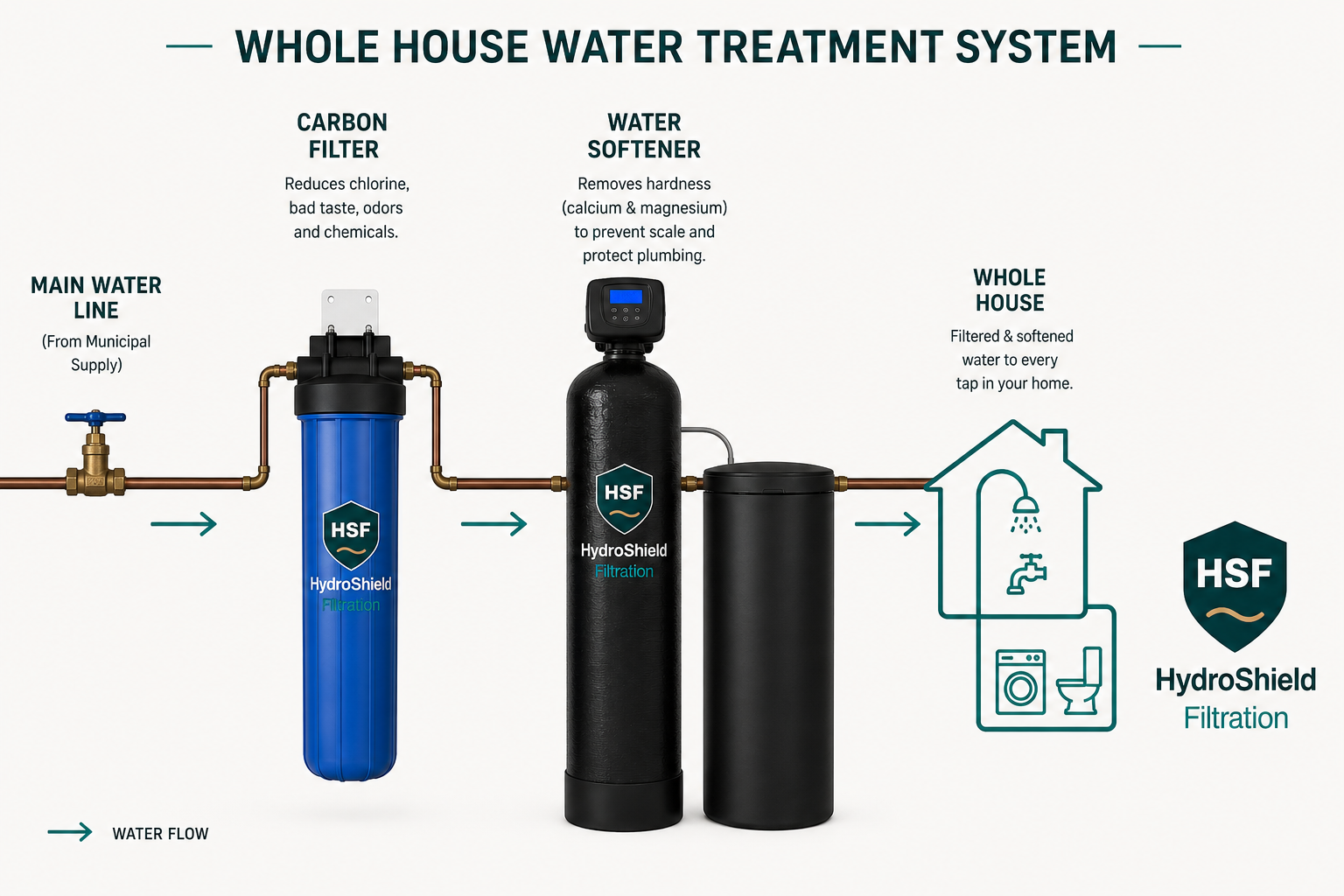
A carbon filter, whether whole-home or a simple pitcher filter, is effective at reducing chlorine taste and odor. Chloramine is somewhat more resistant to carbon filtration than free chlorine, which is one reason filter media and contact time matter when a system is being sized.