
Reverse Osmosis vs. Whole-Home Filtration: What Each Actually Removes
They solve different problems. Most homes that want complete protection actually need both.
"Filtration" gets used as one word for two very different systems, and the mismatch causes a lot of confused installs.
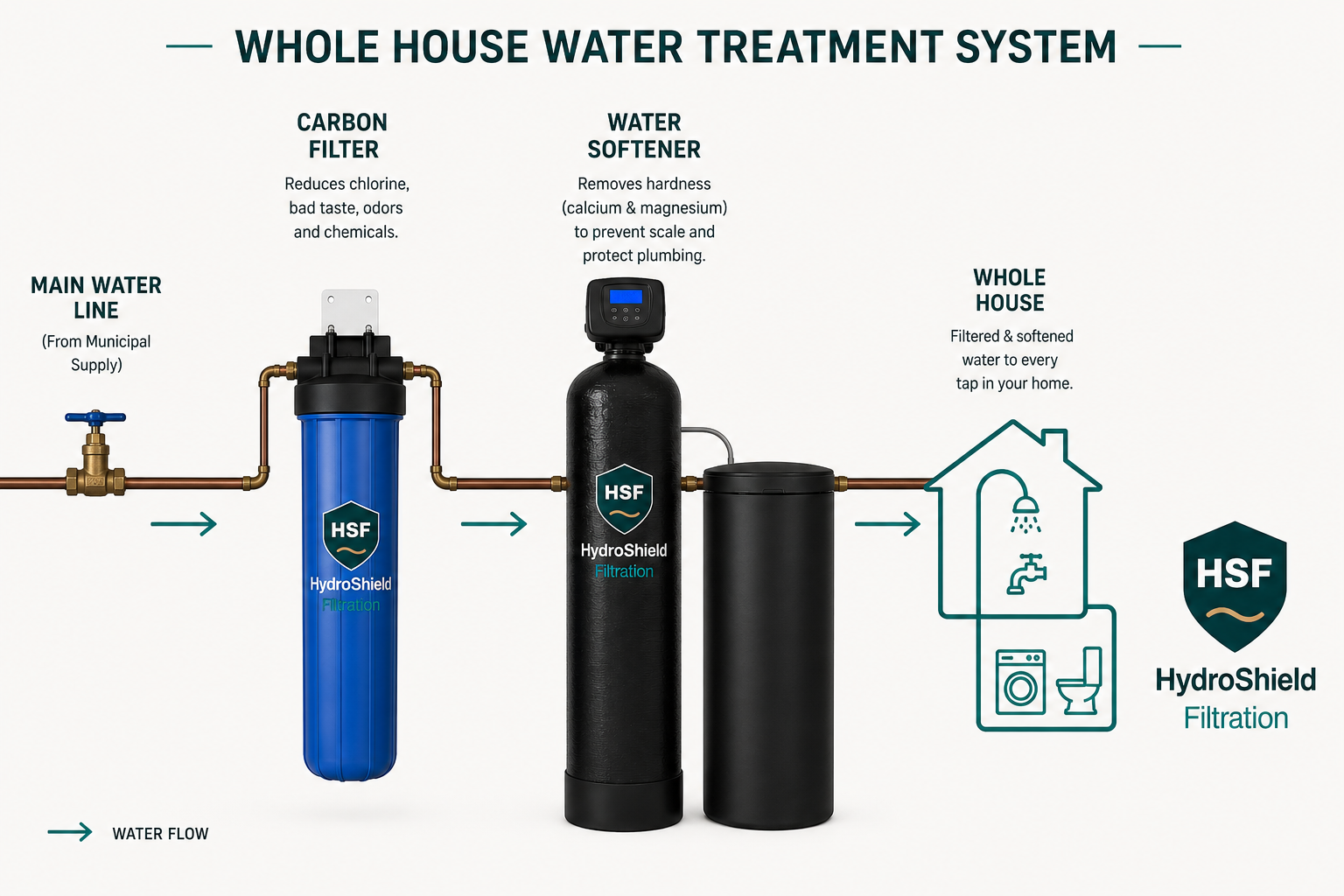
Whole-home filtration and softening
Installed at the main line, this treats every drop of water entering the house, from showers and laundry to the dishwasher and every faucet. A typical setup pairs a carbon filter, which reduces chlorine, chloramine, and taste and odor issues, with a softener, which removes the calcium and magnesium that cause hard-water buildup. It protects plumbing and appliances and improves water at every fixture, but it isn't built to strip out things like lead, PFAS, or dissolved solids to near-zero levels.
Reverse osmosis (RO)
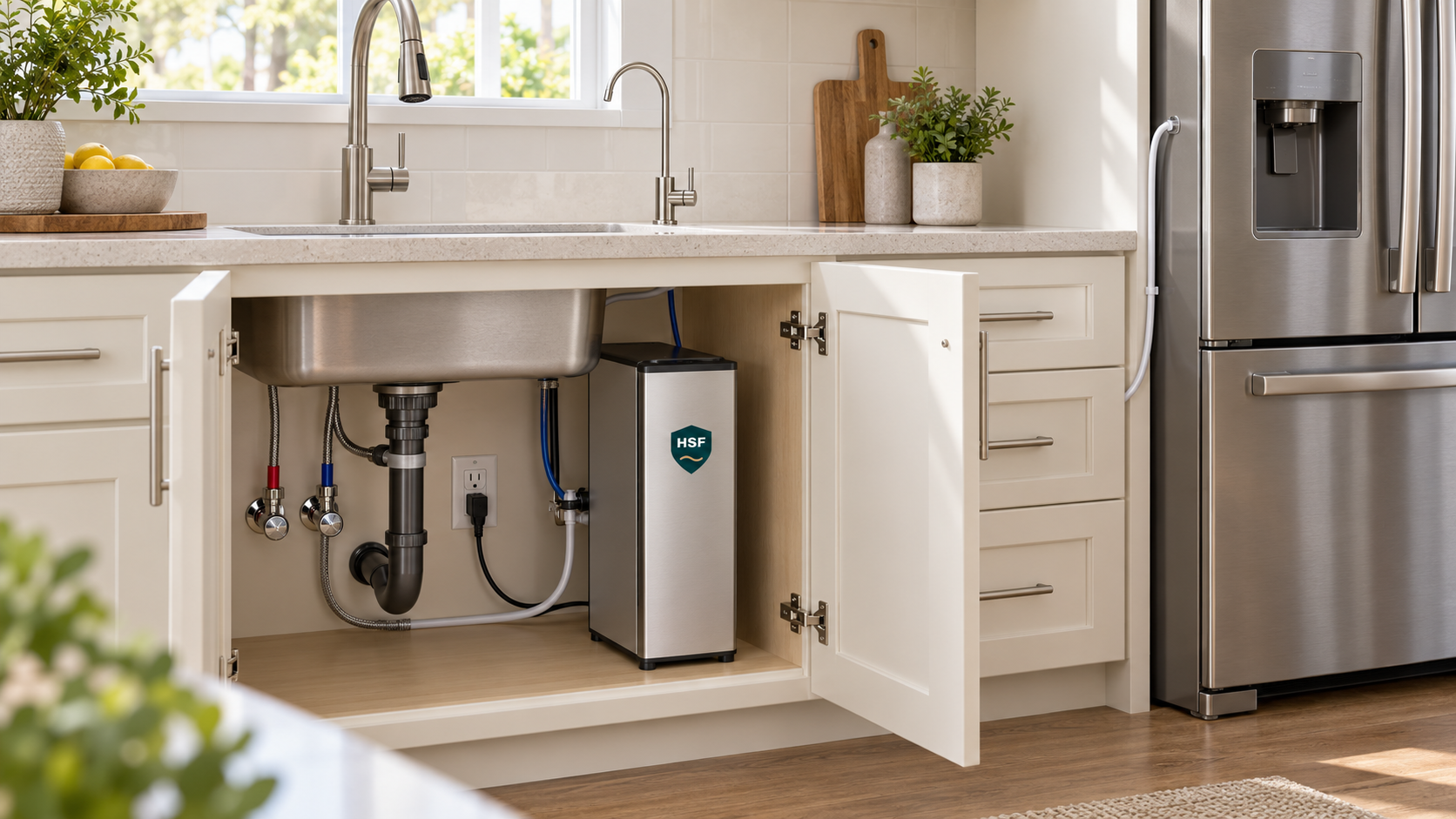
RO is a point-of-use system, almost always installed under the kitchen sink with its own dedicated faucet. It pushes water through a semi-permeable membrane fine enough to reject dissolved contaminants a carbon filter can't touch, including lead, arsenic, nitrates, and PFAS. It's the closest thing to bottled-water quality at the tap, but it only treats the water at that one faucet, not the whole house.
Why homes often need both
Whole-home filtration solves the problems you feel: scale, spots, dry skin, and shortened appliance life. RO solves the problems you can't see or taste: the contaminants regulators actually set health-based limits for. Neither one substitutes for the other; they're addressing different water at different points in the house.
The one place to start
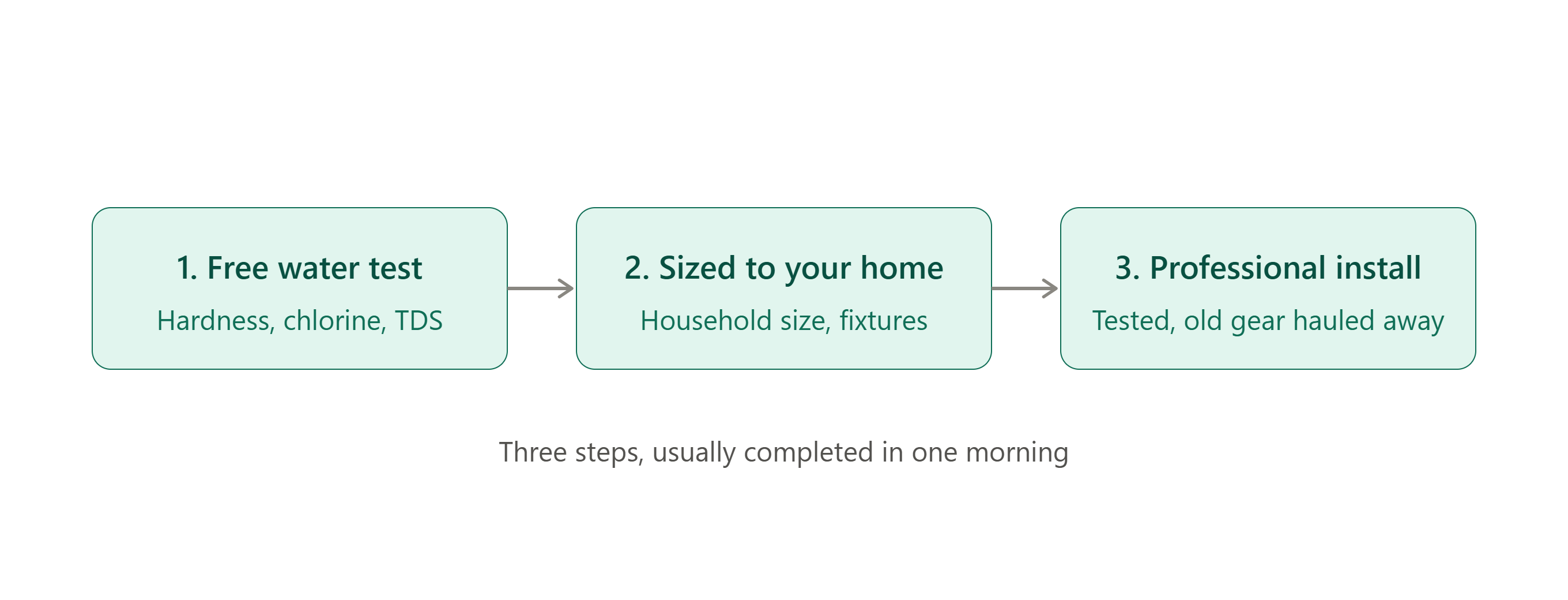
A water test tells you which of these problems you actually have before you buy either system. Hardness and RO needs don't always show up together, and sizing either system without a test usually means paying for capacity you don't need.